00300
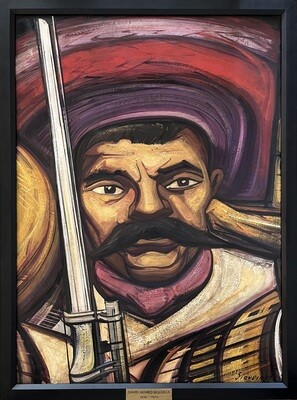
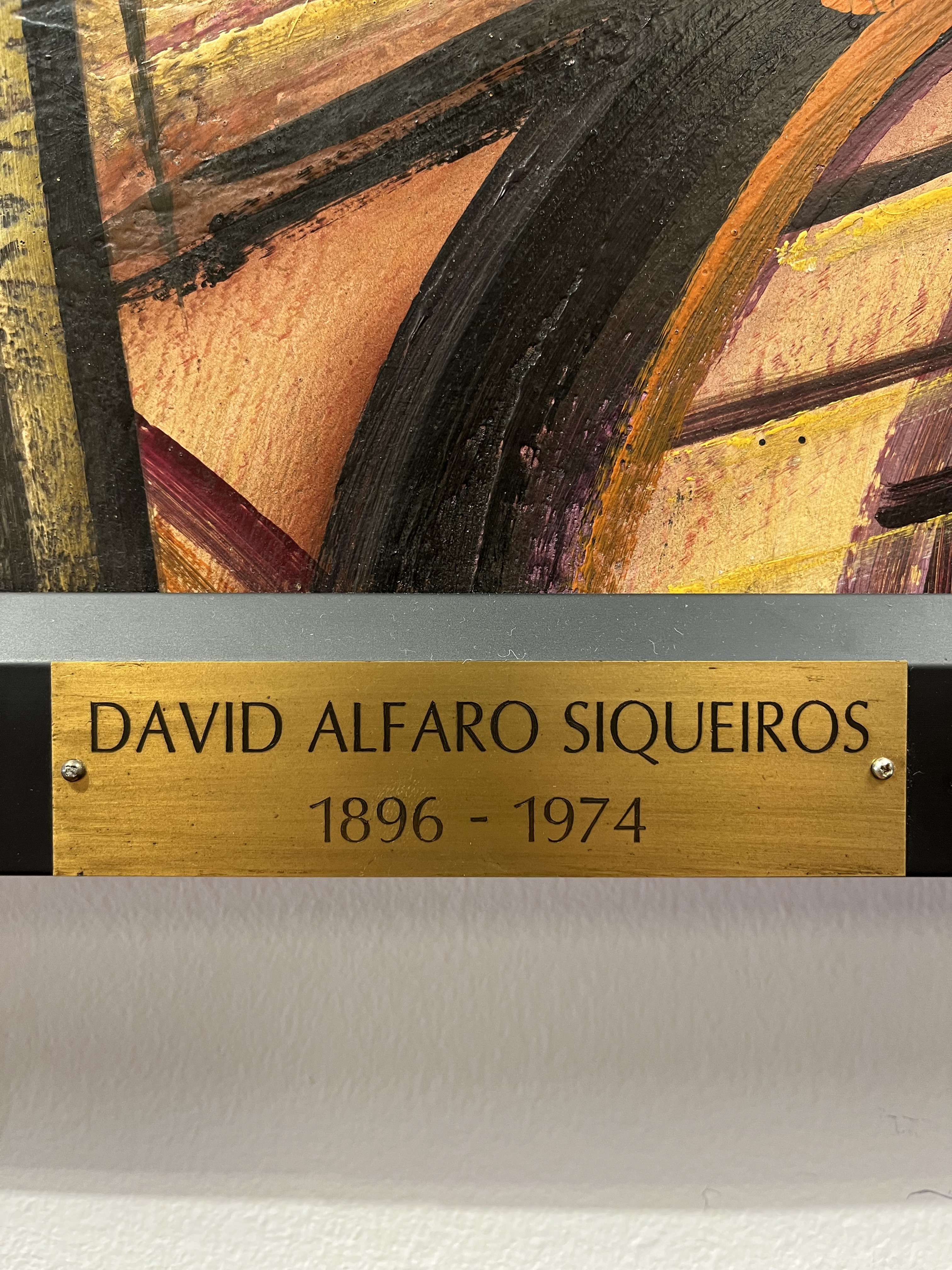
Artist: David Alfaro Siqueiros (1896-1974) Mexican
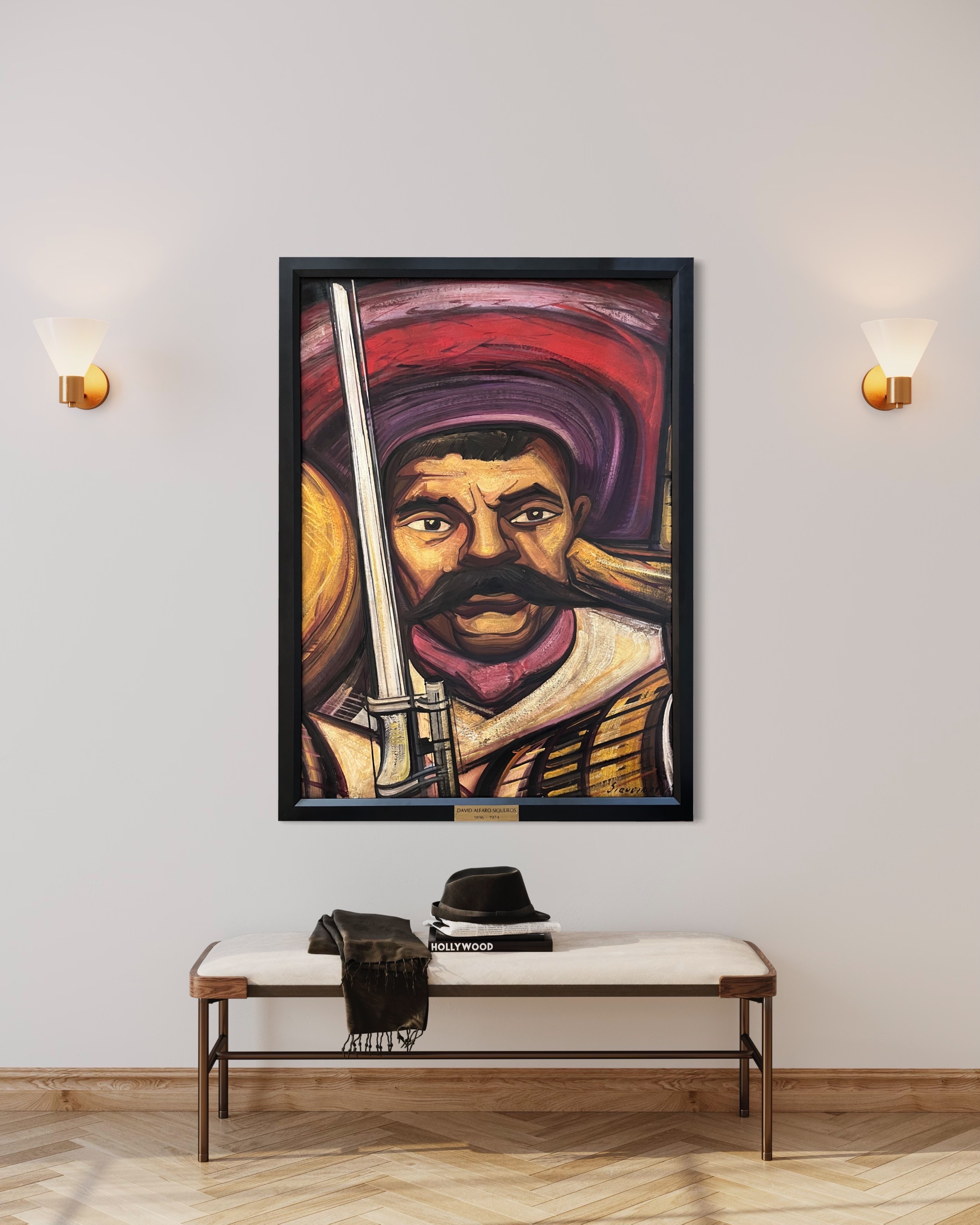
Title: Emiliano Zapata
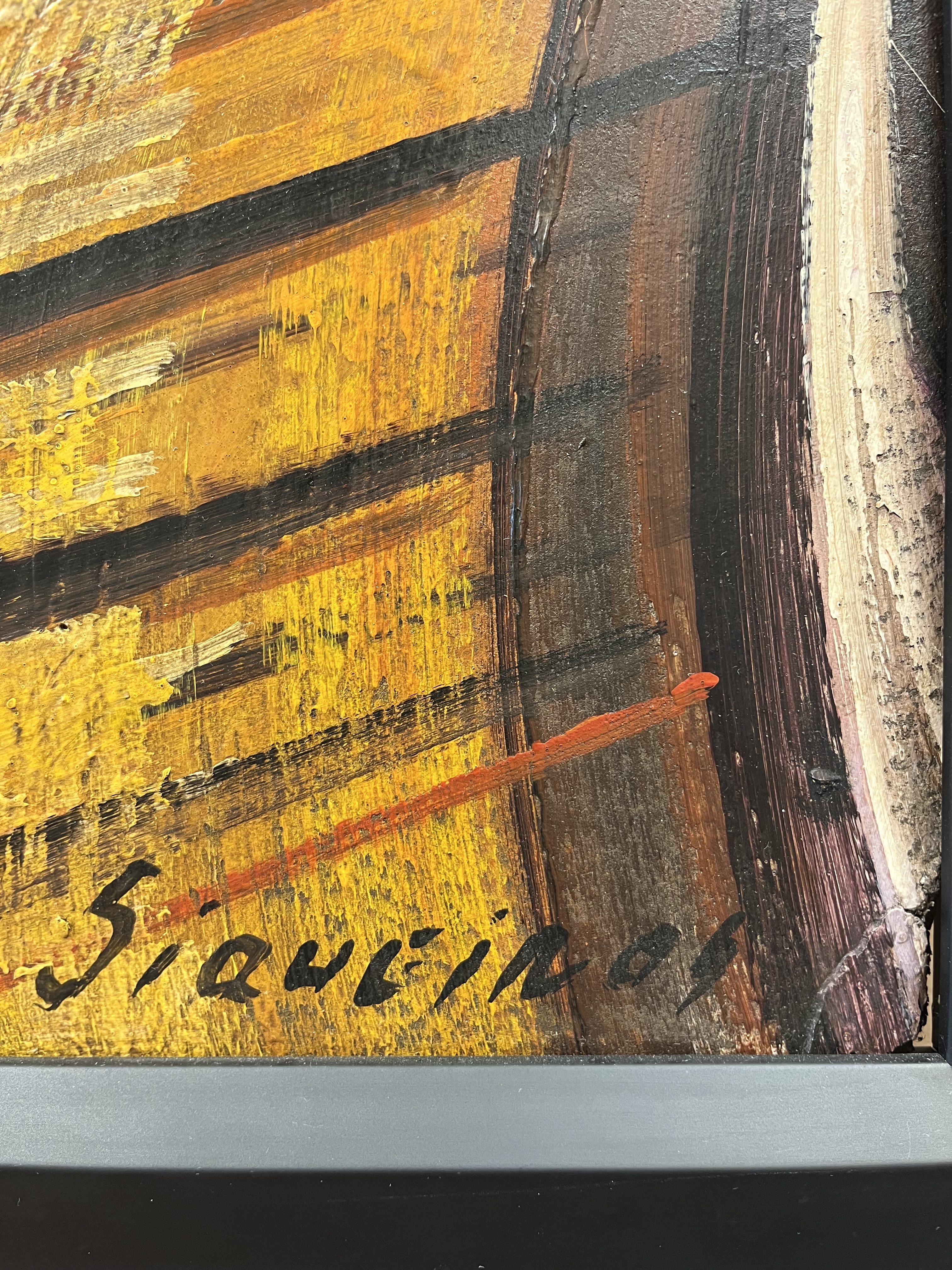
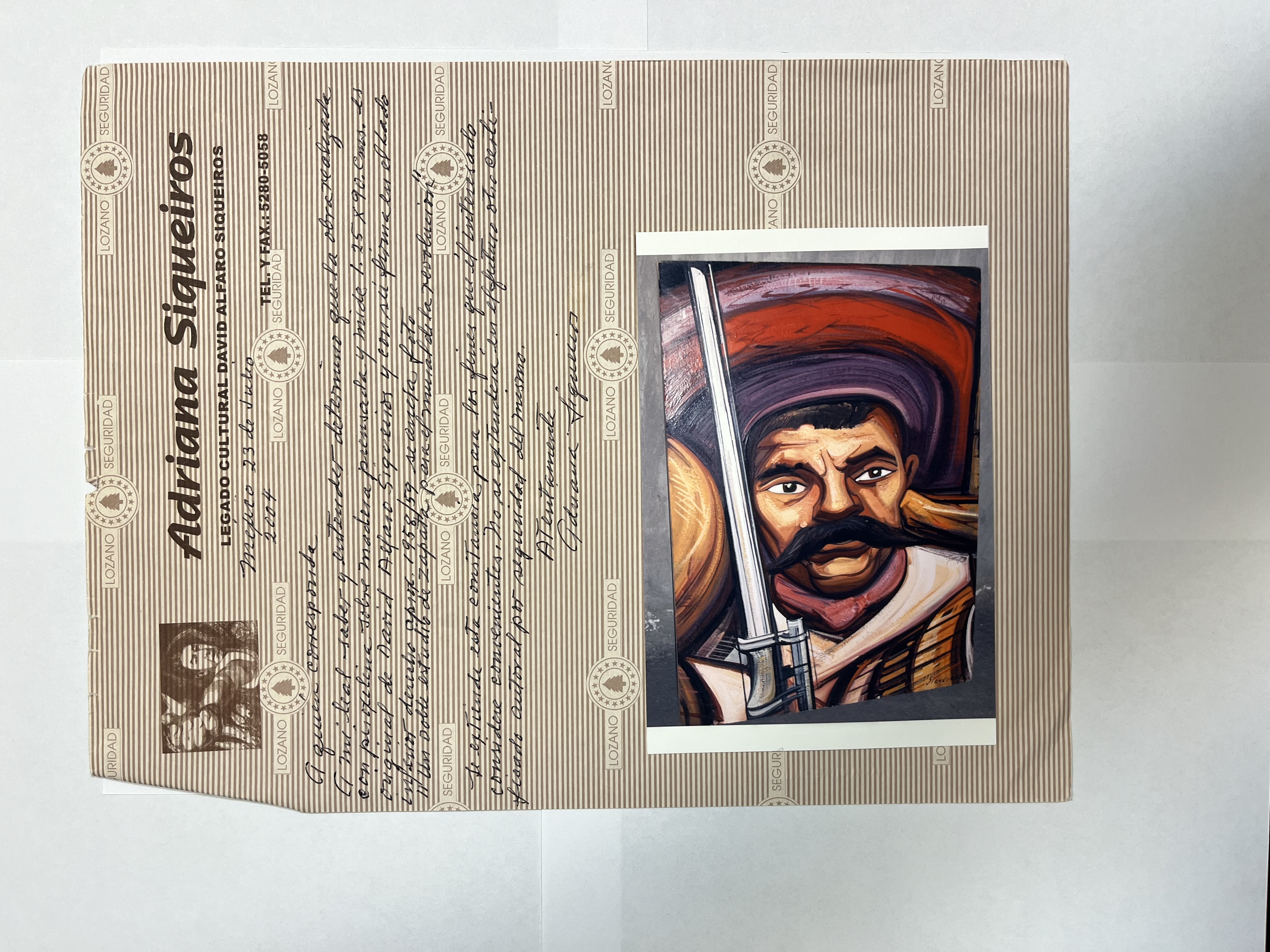
Medium: Pyroxylin on Wood Panel, Signed Lower Right
Size: Unframed 35” x 49”, Framed 39” x 53”
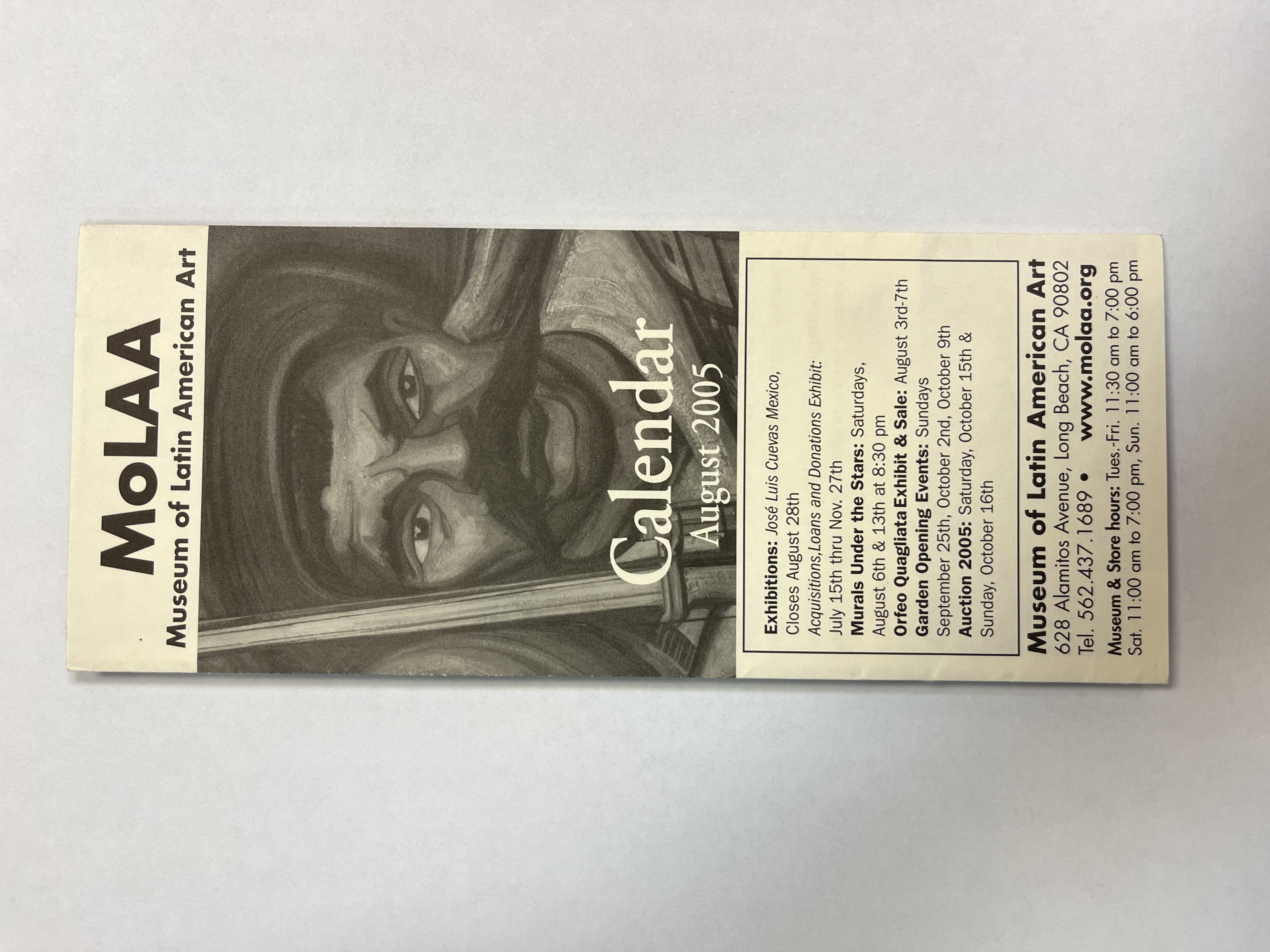
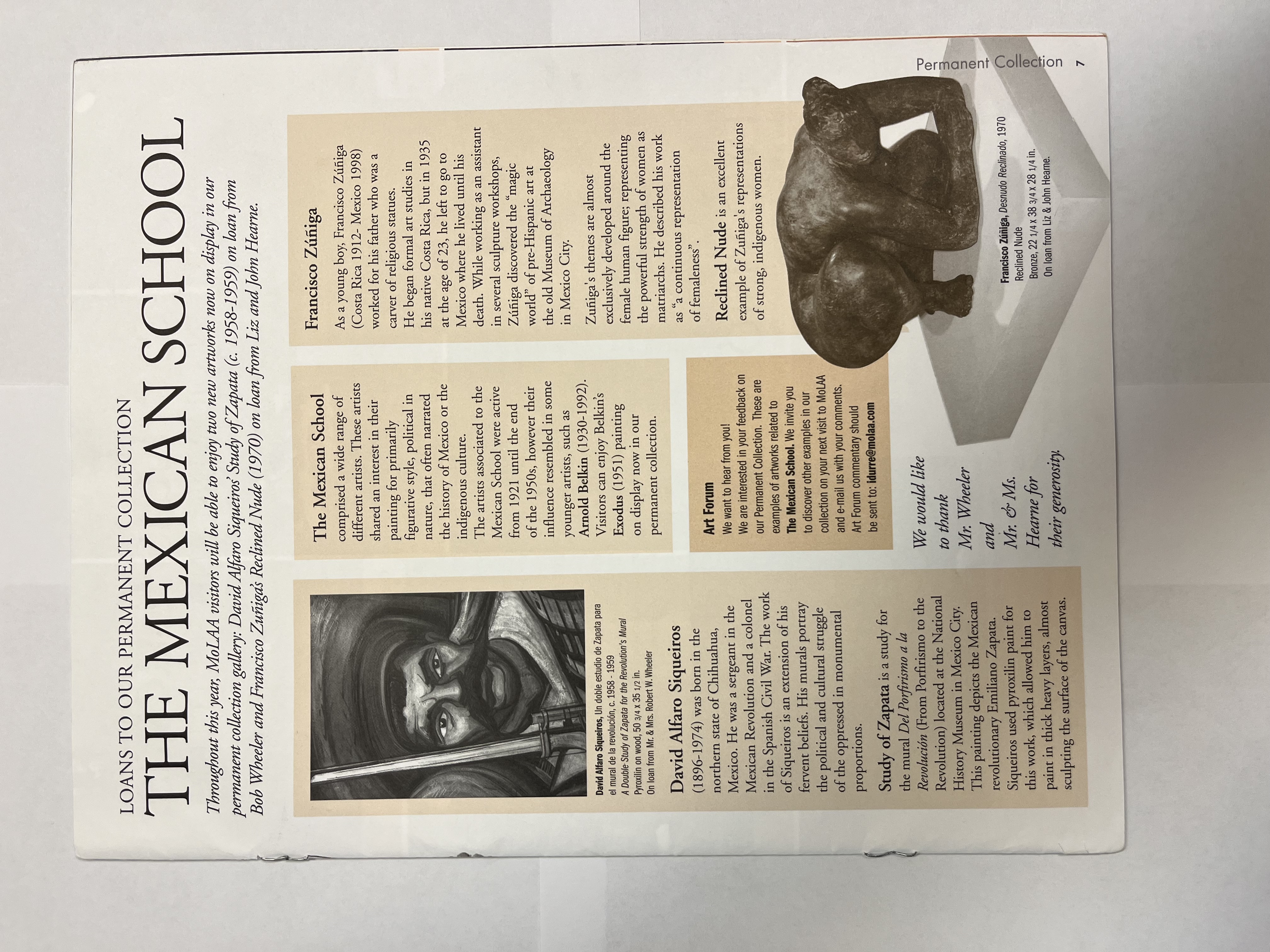
David Alfaro Siqueiros painted this vivid portrait of Emiliano Zapata in preparation for his large mural, Del Porfirismo a la Revolucion, where he uses dramatic diagonals, crowded figures, and stark contrasts between shadow and light to visually depict the violent upheaval and social tensions that propelled Mexico from dictatorship to revolution. The subject of this work, Emiliano Zapata, was a leading figure of the Mexican Revolution who championed agrarian reform and fought tirelessly for the redistribution of land to impoverished peasants under his rallying cry, “Tierra y Libertad” (Land and Liberty).
In this study, Siqueiros presents the revolutionary leader not as a distant historical icon but as a monumental, living force embedded within the social struggle he championed. Zapata’s figure is rendered with a commanding physical presence; he is broad-shouldered, grounded, and frontal, asserting both moral and political authority. Siqueiros emphasizes the tactile weight of the body through sculptural modeling and dynamic foreshortening, techniques that intensify the sense of immediacy and viewer engagement.
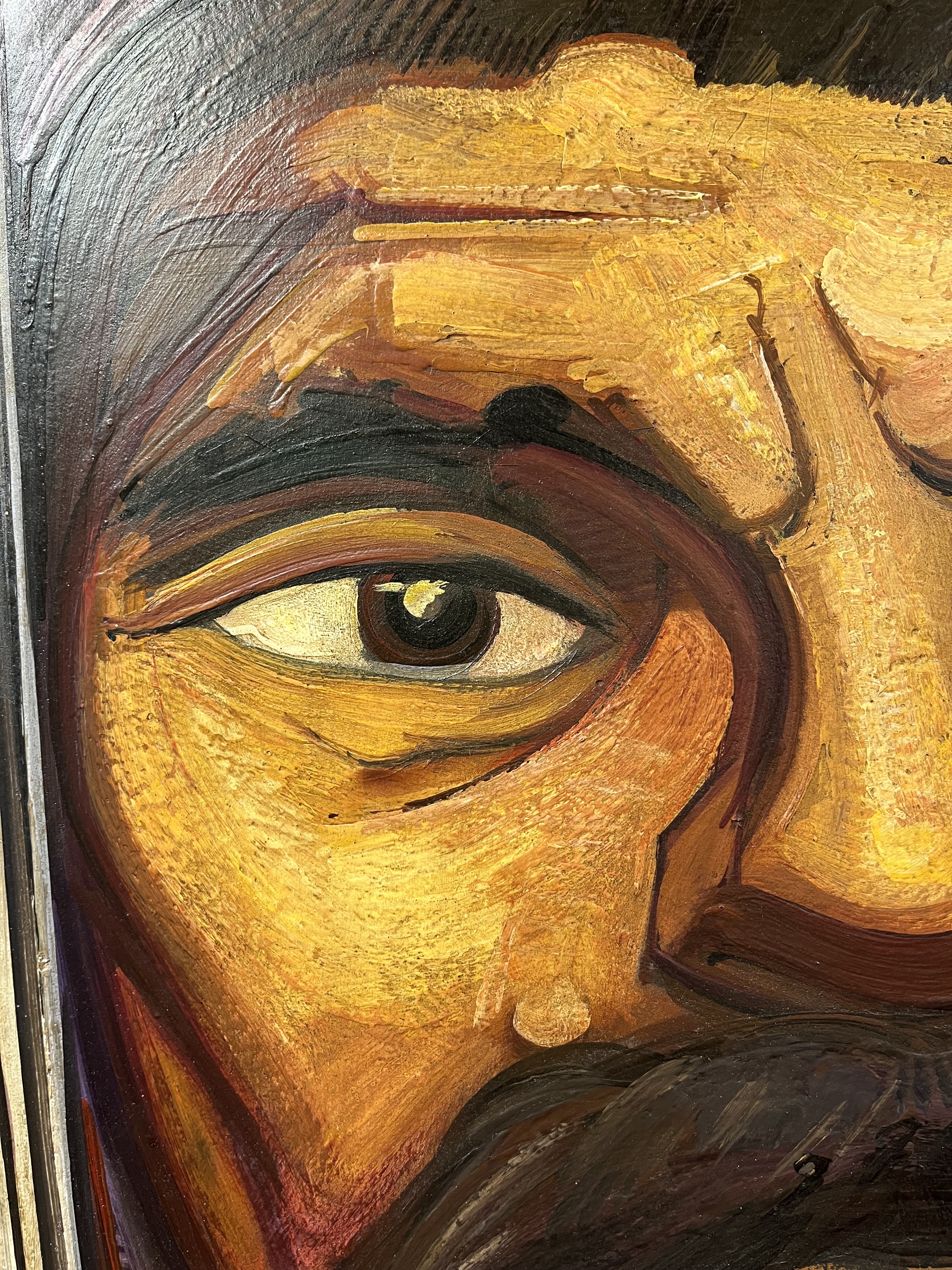
The sombrero casts deep shadows across Zapata’s face, heightening the dramatic interplay of light and dark while underscoring his stoic resolve. His mustache and stern expression are delineated with sharp, confident lines that reinforce his determination and ideological clarity. Through these formal strategies, Siqueiros transforms Zapata into a symbol of land reform, resistance, and enduring popular sovereignty, fusing individual portraiture with sweeping social narrative in a manner characteristic of Mexican muralism’s ideological and aesthetic ambitions.
Biography:
A Mexican painter and muralist, Siqueiros' art reflected his Marxist political ideology. He was one of the three founders of the modern school of Mexican mural painting (along with Diego Rivera and José Clemente Orozco). The artist’s style merged the aesthetics of socialist realism, pre-Columbian art, Cubist handling of forms, and surreal imagery to create compelling and often politically-charged contentBorn on December 29, 1896 in Chihuahua City, Mexico, and a political activist since his youth, Siqueiros studied at the San Carlos Academy of Fine Arts, Mexico City, before leaving in 1913 to fight in the army of Venustiano Carranza during the Mexican Revolution. Shortly thereafter, Siqueiros moved to Paris where he met Diego Rivera and came under the influence of artists like Paul Cézanne and Pablo Picasso. He then returned to Mexico City and worked as a muralist for Álvaro Obregón’s revolutionary government, during which time he joined the Syndicate of Revolutionary Mexican Painters, Sculptors, and Engravers in support of the recent revolution.
Siqueiros and his followers produced thousands of square metres of vivid wall paintings in which numerous social, political, and industrial changes were portrayed from a left-wing perspective. He died on January 6, 1974 in Cuernavaca, Mexico. Today, his works are held in the collections of the Art Institute of Chicago, The Museum of Modern Art in New York, the National Gallery of Art in Washington, D.C., and the Tate Gallery in London, amongst others.