00353
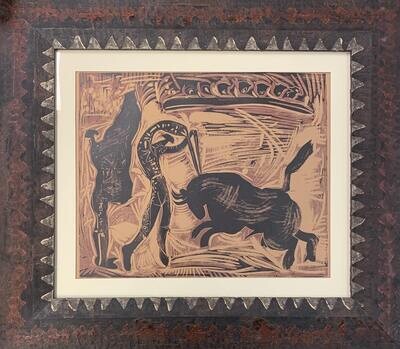
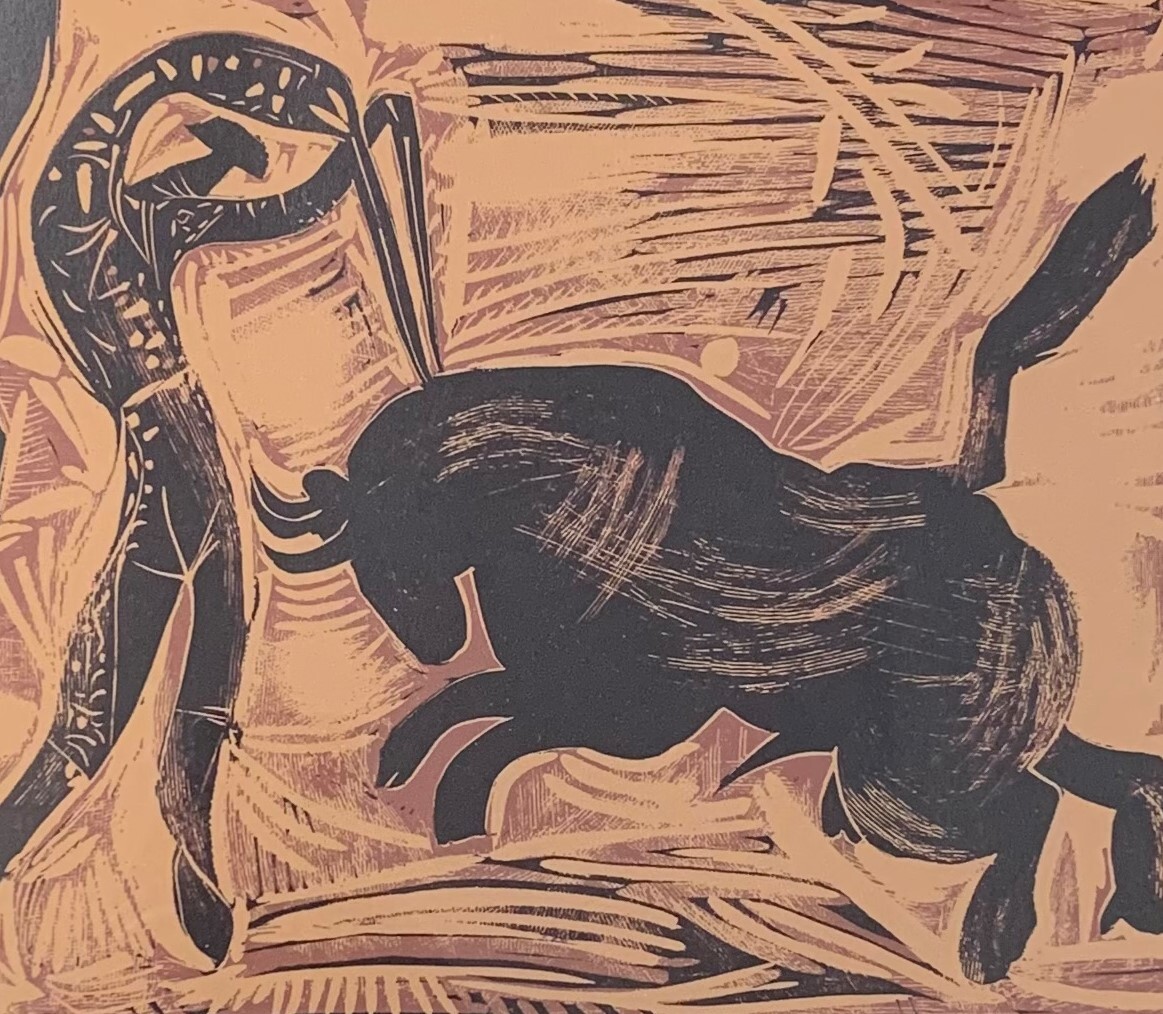
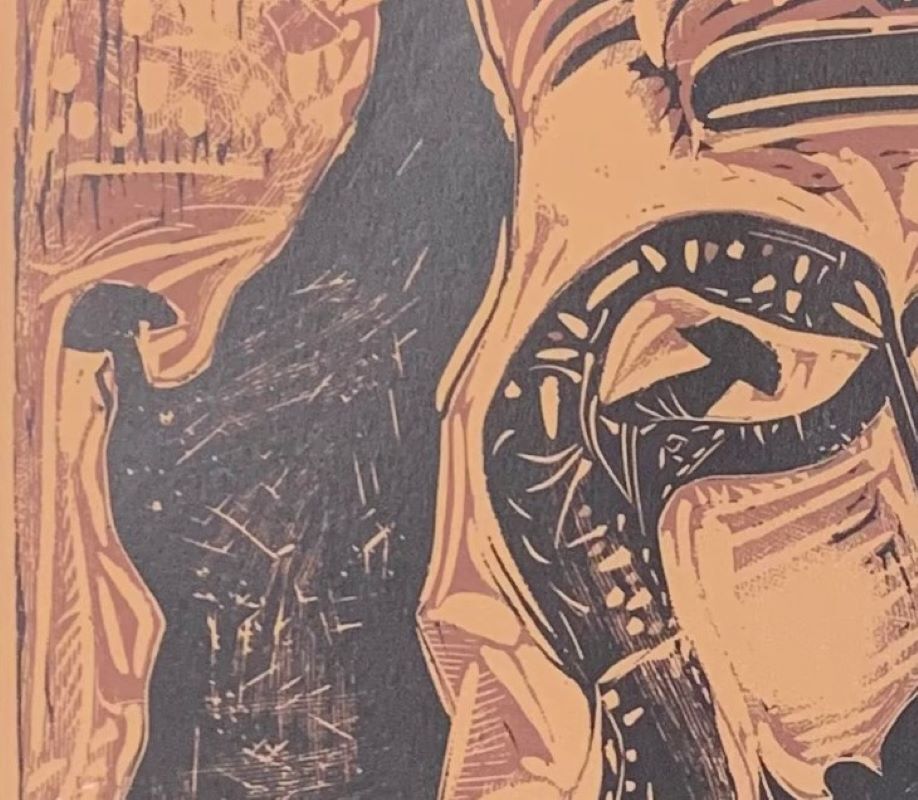
Title: Le Banderillero, 1959
Medium: Linocut
Size: 13” x 10.5” Unframed; 21” x 18.5” Framed
Price: $3200
Description
Pablo Picasso experimented with linoleum cuts by gouging a sheet of aluminum fused to a wood block. This technique of cutting out images became efficient as compared to wood block cutting. With Le Banderillero there were 5 phases of blocks to make the final image. Picasso creates an arena filled with spectators where the banderillero’s dance of death with the bull is gestural. The matador swirls his cape. The bull lunges forward with a lowered head in a brutal, balletic scene. The Spanish bullring was a popular subject matter for Picasso which he revisited often. This linocut is framed as boldly as the print.
Pablo Picasso was born on October 25, 1881, in Málaga, Spain. The son of an academic painter, José Ruiz Blanco, he began to draw at an early age. Picasso’s visual style and choice of subject matter developed dramatically over a short period of time. The time between 1901 and 1904 has come be known as his ‘Blue Period,’ 1905 his ‘Rose Period,’ from 1908 to 1911 his Analytic Cubist phase, and from 1912 forward his Synthetic Cubist phase. While in Paris, Picasso frequented the Musée d’Ethnographie du Trocadéro, where he saw works of indigenous African art, and in Spain discovered ancient Iberian sculpture. He continued to work in painting, drawing, prints,
ceramics, and until his death in 1973.